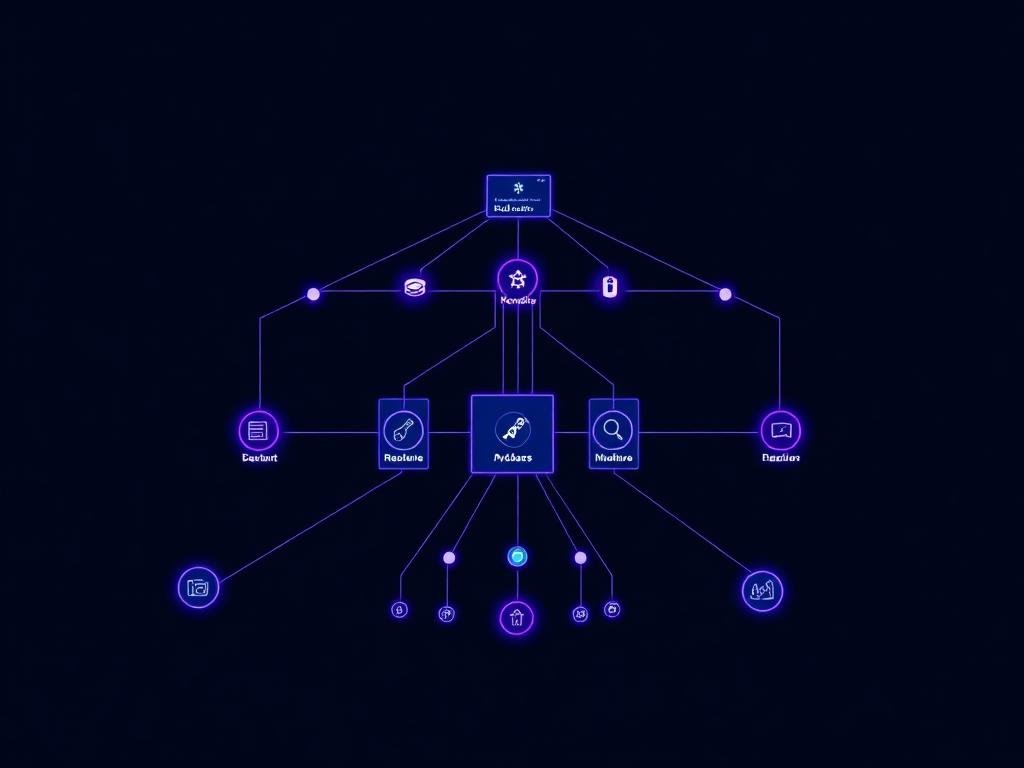
Agent orchestration and the backend behind it.
LangChain and Python handle the reasoning layer, routing intent, calling tools, and keeping an agent's behavior predictable instead of improvised.
Models are the easy part
Picking a model takes an afternoon. The work is everything around it: retrieval that returns the right context, tool calls that fail safely, guardrails that stop a confident wrong answer, and evaluation that catches regressions before customers do.
We build that layer, grounded retrieval, structured tool use, and model routing that sends cheap questions to cheap models and hard ones to strong ones.
- Retrieval grounded in your own content
- Structured tool calling with validation
- Model routing for cost and latency
- Evaluation suites run on every change
- 01
Knowledge pipeline
Documents chunked, embedded, and refreshed on a schedule so answers don't drift from reality.
- 02
Tooling
Every external action is a typed, validated tool with explicit failure behaviour.
- 03
Guardrails
Input and output checks, refusal rules, and hard limits on anything involving money or personal data.
- 04
Evaluation
A regression set of real questions with expected behaviour, run before anything ships.
Which model do you use?
Whichever fits the task. Most builds route across two or three by cost, latency, and reliability.
How do you stop hallucinations?
Grounded retrieval, refusal rules, and evaluation. We reduce it hard and design escalation for what's left.
Is our data used for training?
No. We use enterprise endpoints with training disabled.
Still reading? Good. Book a 20-minute call.
No sales pitch, we'll ask what's slow or missing right now, and tell you honestly if this is the fix.